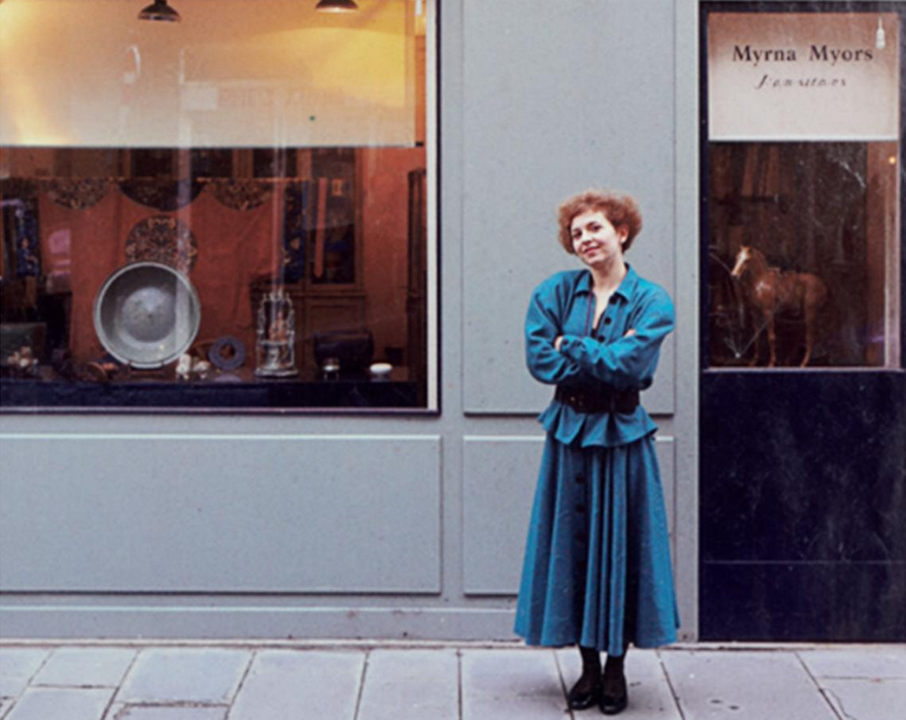
It is with great pleasure that we present the second part of the Sam and Myrna Myers Collection — an extraordinary ensemble that has traveled across continents and inspired scholars, connoisseurs, and collectors alike. It is, without question, one of the most significant and important collections ever entrusted to this gallery.
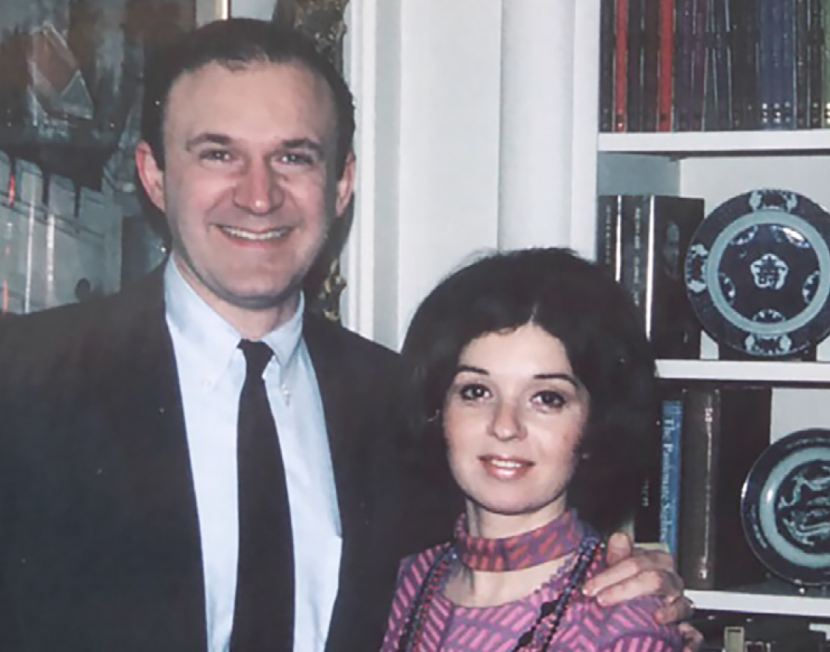
Sam and Myrna Myers
Myrna and Sam Myers were both second-generation Americans, their parents having risen through the classic immigrant experience following the Depression. As Myrna often quipped, “I married up in life. My father was a grocer, but Sam’s was a delicatessen man.” Both were the first in their families to attend college, and neither grew up surrounded by antiques or art.
The couple’s introduction to antiques began during their time in New York, but it was in Paris that their passion for collecting truly flourished. Initially drawn to glass, ceramics, copper, and carved wooden objects, they were not yet focused on anything of particular importance. However, their first trip to Switzerland in 1966 changed the course of their collecting journey. There, they discovered the Casa Serodine antique shop in Ascona, which would become a key location for their growing collection. Over the next few years, they returned to Ascona to acquire more pieces.
Their first acquisitions came from the Mediterranean and Mesopotamia, but in 1968, they were introduced to Chinese porcelains in Ghent, initially focusing on 17th century blue and white wares. As their collection expanded, Myrna suggested diversifying into other areas of Chinese art. In 1974, she remarked, “I’m getting pretty tired of Chinese porcelain. Why don’t you see what else you can find?” Sam, puzzled, asked, “What would you like?” Myrna replied, “I don’t know. Maybe sculpture or jade.”
During a trip to the United States, Sam purchased a shoebox filled with unidentifi ed jades, which marked the beginning of more than 40 years of study and research. The shoebox contained pre-Colombian and Chinese jades, including a Han dynasty cicada, which Myrna wore for many years. Their collection grew to include signifi cant pieces from renowned collections, including those of Armand Trampitsch (1893–1970) and Charles Vignier (1863–1934).
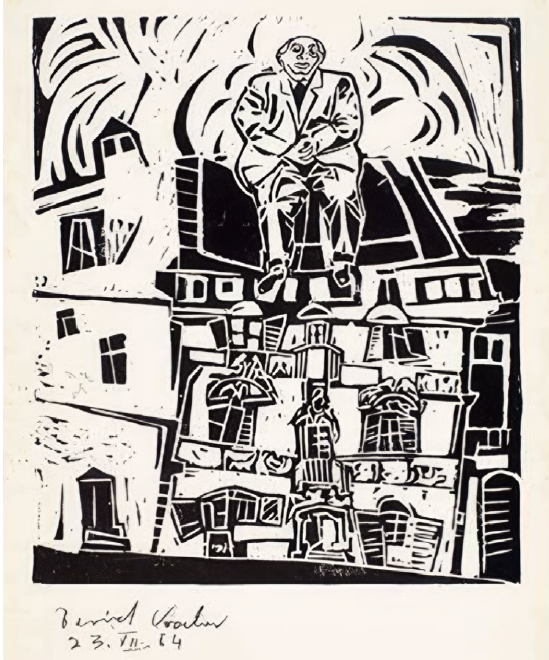
Casa Serodine by Bernd Kroeber
Simultaneously, Myrna developed a deep passion for East Asian silks, which would become one of the defining aspects of her legacy. In 1974, at the Maastricht Fair, she was captivated by the Tibetan silks displayed by Moke Mokotoff, whose vibrant colors and intricate designs complemented the Chinese porcelain she had been collecting. This sparked a lifelong fascination with Far Eastern textiles, particularly Tibetan and Chinese pieces.
Her journey led her to Krishna Riboud, a Paris based textile scholar, who was in the process of establishing the AEDTA, an Asian textile study center. Riboud’s mentorship played a pivotal role in Myrna’s immersion in Asian textiles, where she contributed to publications and attended conferences. Her growing interest in the symbolic meaning of the dragon robe, inspired by John Vollmer’s writings, became a key focus in her expanding collection of Ming and Qing costumes.
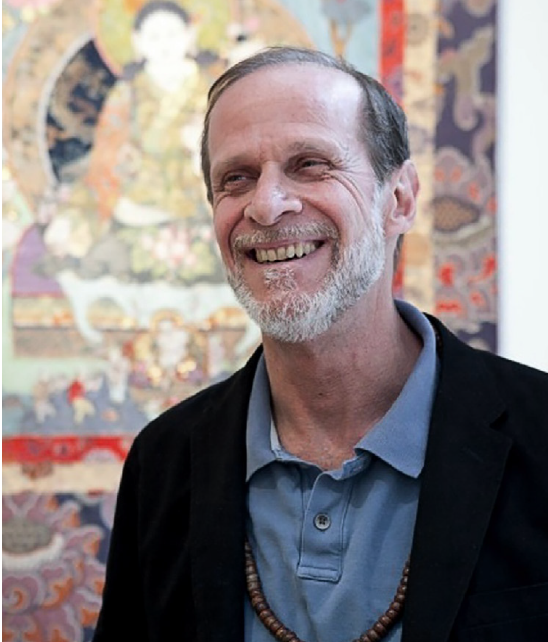
John 'Moke' Mokotoff (1950-2022) exhibiting for Asia Week New York
In 1976, Myrna officially became an antique dealer in Paris after graduating from the Ecole du Louvre. She She hosted salons and meticulously researched each exhibition, writing comprehensive summaries on the history, signifi cance, and meaning of the pieces displayed. This marked the beginning of her professional career as a dealer, researcher, and expert in Asian art and antiques.
Three decades later, Myrna began to secure the legacy of the collection she had built. She achieved this through major donations: most notably, her extensive, well-documented, and widely exhibited textile collection to the Musée Guimet, as well as substantial contributions to the Musée des Arts Asiatiques in Nice, a museum “greatly indebted to her,” according to its director Adrien Bossard. Beyond these gifts, numerous sales to museums took place, often at symbolic prices more akin to donations than commercial transactions.
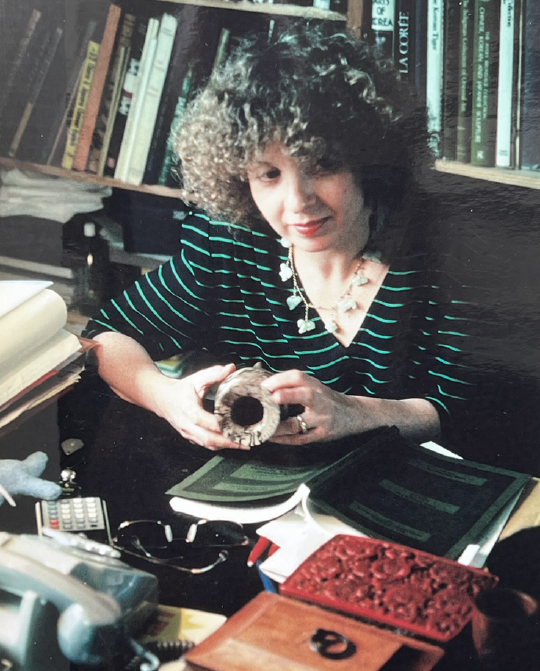
Myrna in her office in Paris
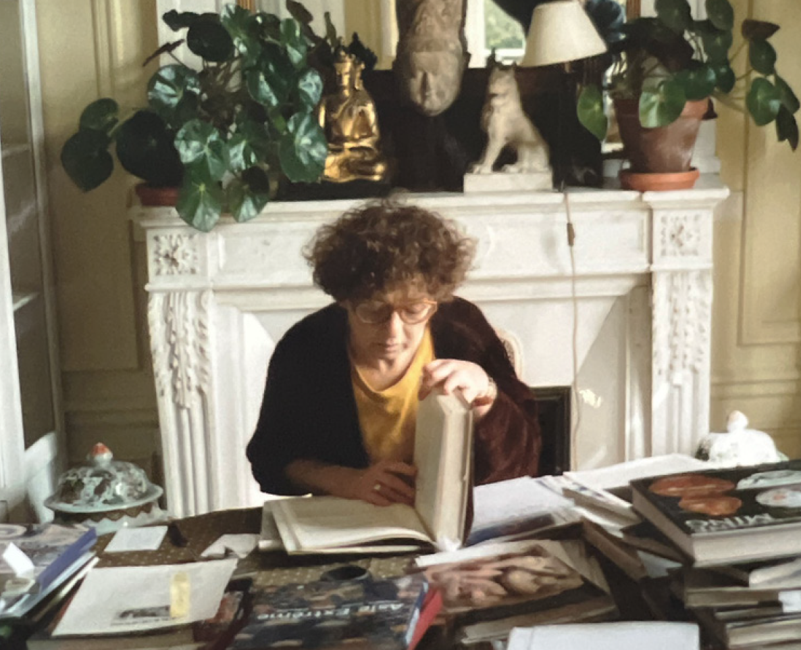
Myrna at her study desk
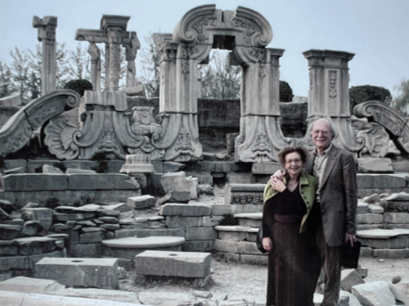
Sam and Myrna at the Old Summer Palace in Beijing
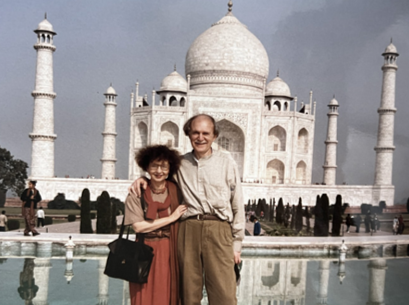
Sam and Myrna at the Taj Mahal
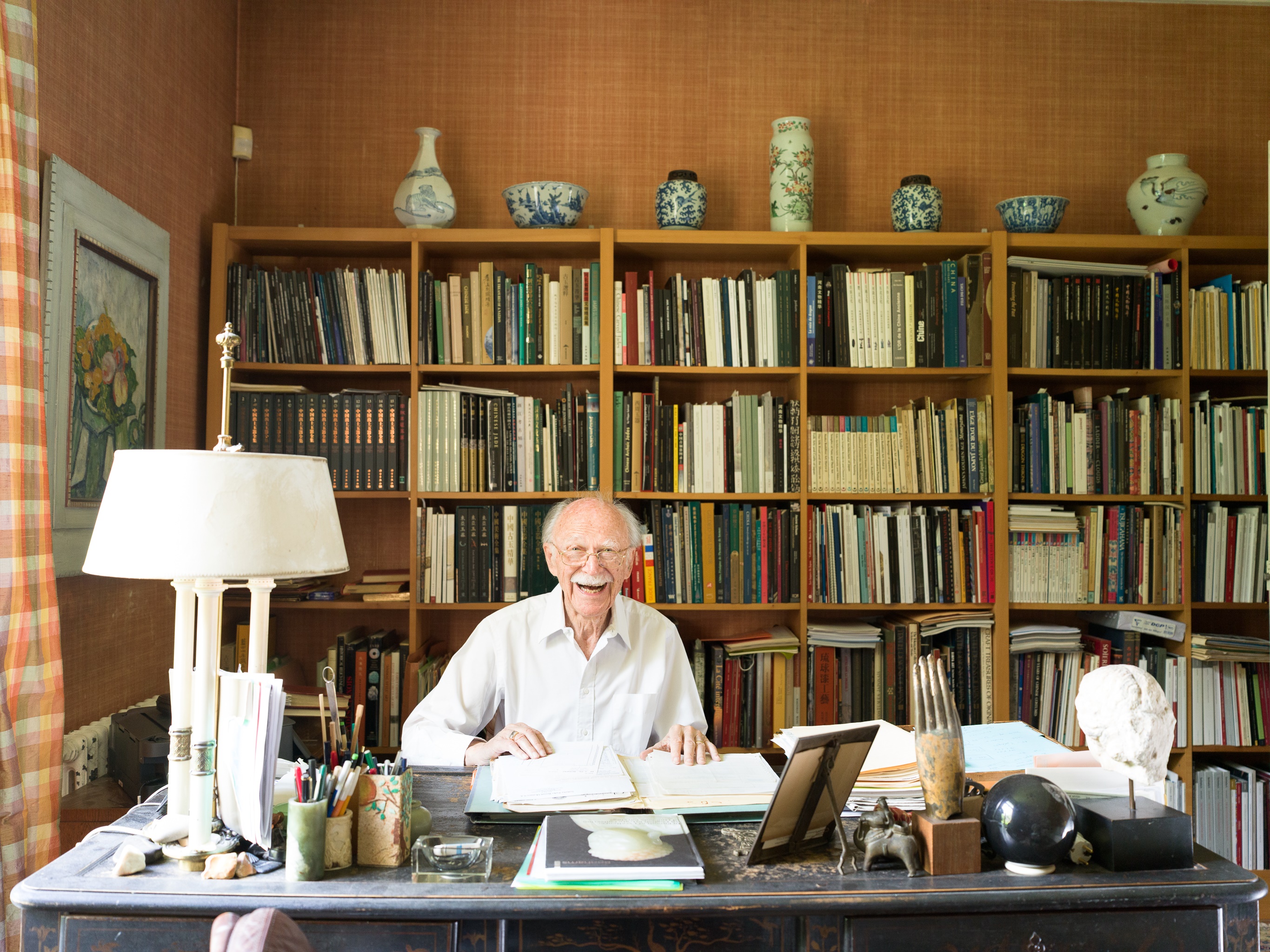
Sam at his office in Versailles
After Myrna’s passing in 2012, Sam Myers continued to work with extraordinary dedication. He spearheaded a project of grand scale: The traveling exhibition and comprehensive publication of their collection, realized under the direction of Jean-Paul Desroches, general curator at the Musée Guimet, and Myrna’s professor at the Ecole du Louvre. This exhibition, which included many of the objects now off ered in this sale, brought the collection to the Kimbell Art Museum in Fort Worth, the Musée Pointe-à-Callière in Montréal, the Fondation Baur in Geneva, and the Musée des Arts Asiatiques, and was accompanied by two state-of-the-art catalogs, Two Americans in Paris and The Beginning of the World. Now 91 years old, Sam remains committed to safeguarding and sharing the collection that defined both his and Myrna’s life.
Their mutual passion for Asian art, deepened by their devotion to each other, not only enriched their own lives but also left a lasting impact on countless museums, exhibitions, and scholarly publications, along with their visitors and readers.
The Myers Collection is the largest and most important private collection of Chinese jade in the West, with many of its most significant pieces entirely unknown to the public. For Sam and Myrna, it was always essential to maintain a core of outstanding jades, most originating from old, distinguished collections and acquired during the 1960s and 1970s. These jades have rarely been seen and remain a wellguarded secret. It is uncertain how many will appear at auction in the coming years, but several certainly will.
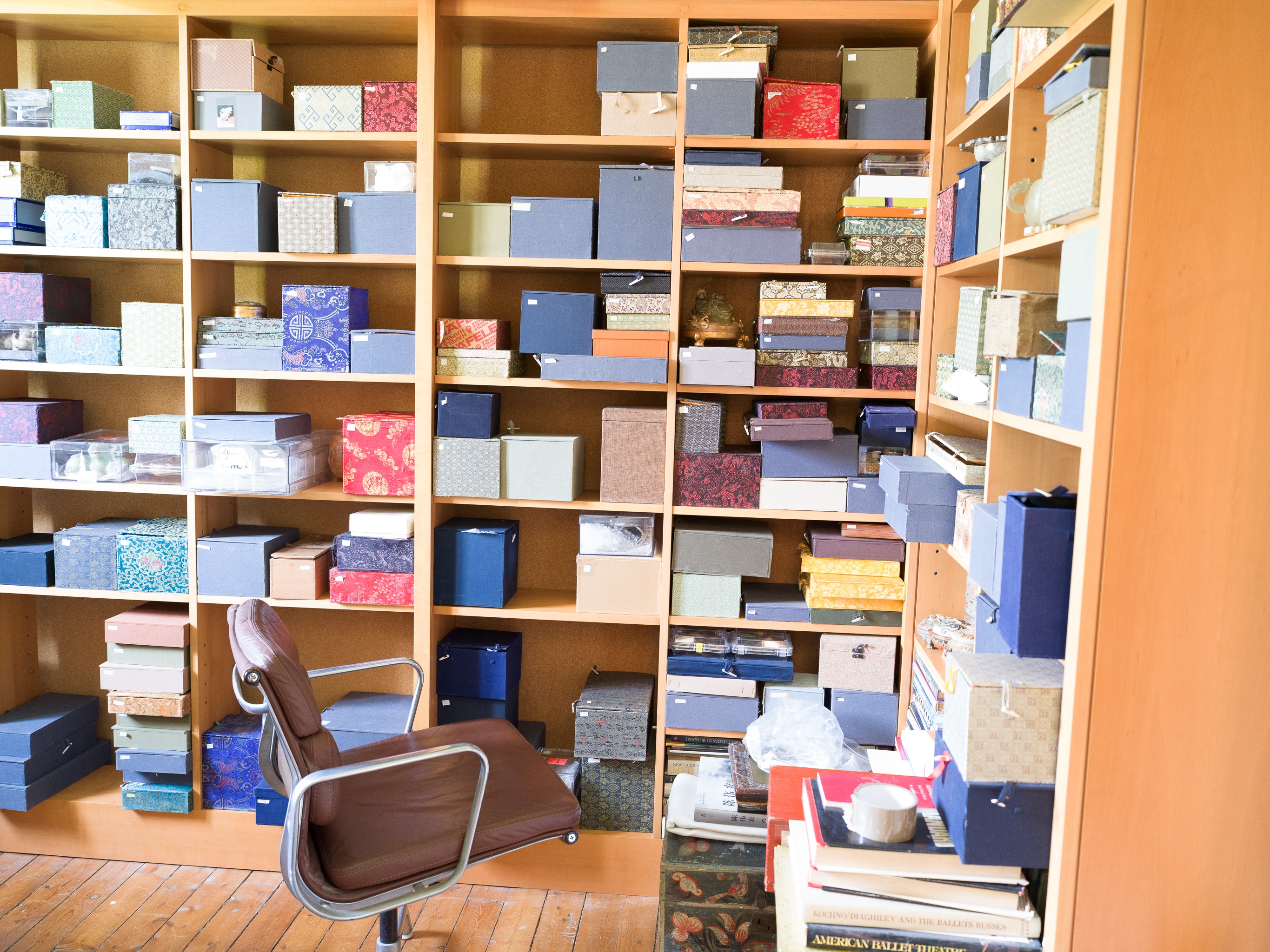
A room in Sam Myers’ home in Versailles, one of many containing hidden treasures
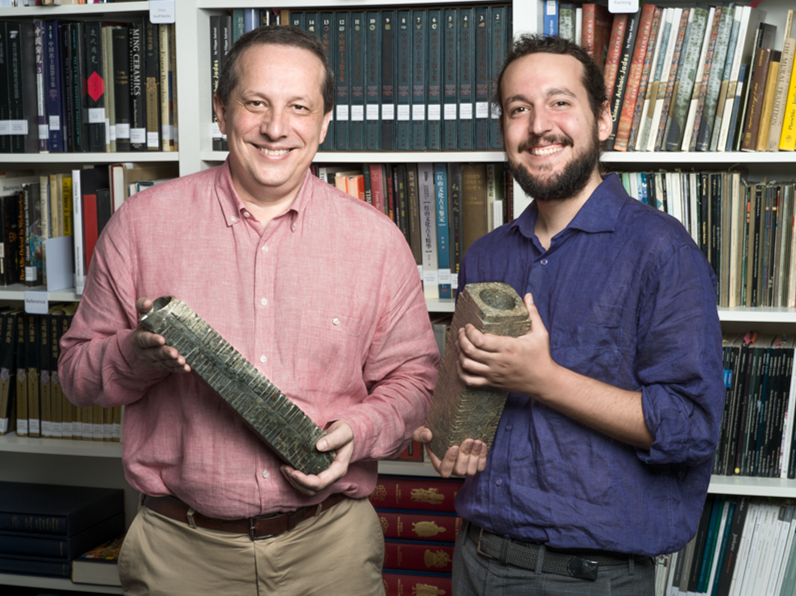
Alex and Max Zacke
This auction honors the remarkable artworks and lasting legacy of two collectors whose vision and generosity have profoundly infl uenced the understanding and appreciation of Asian art for generations. We hope that as you explore this second catalog of the Myers Collection, you experience the same joy, passion, and connection that Sam and Myrna felt while collecting these extraordinary pieces.